
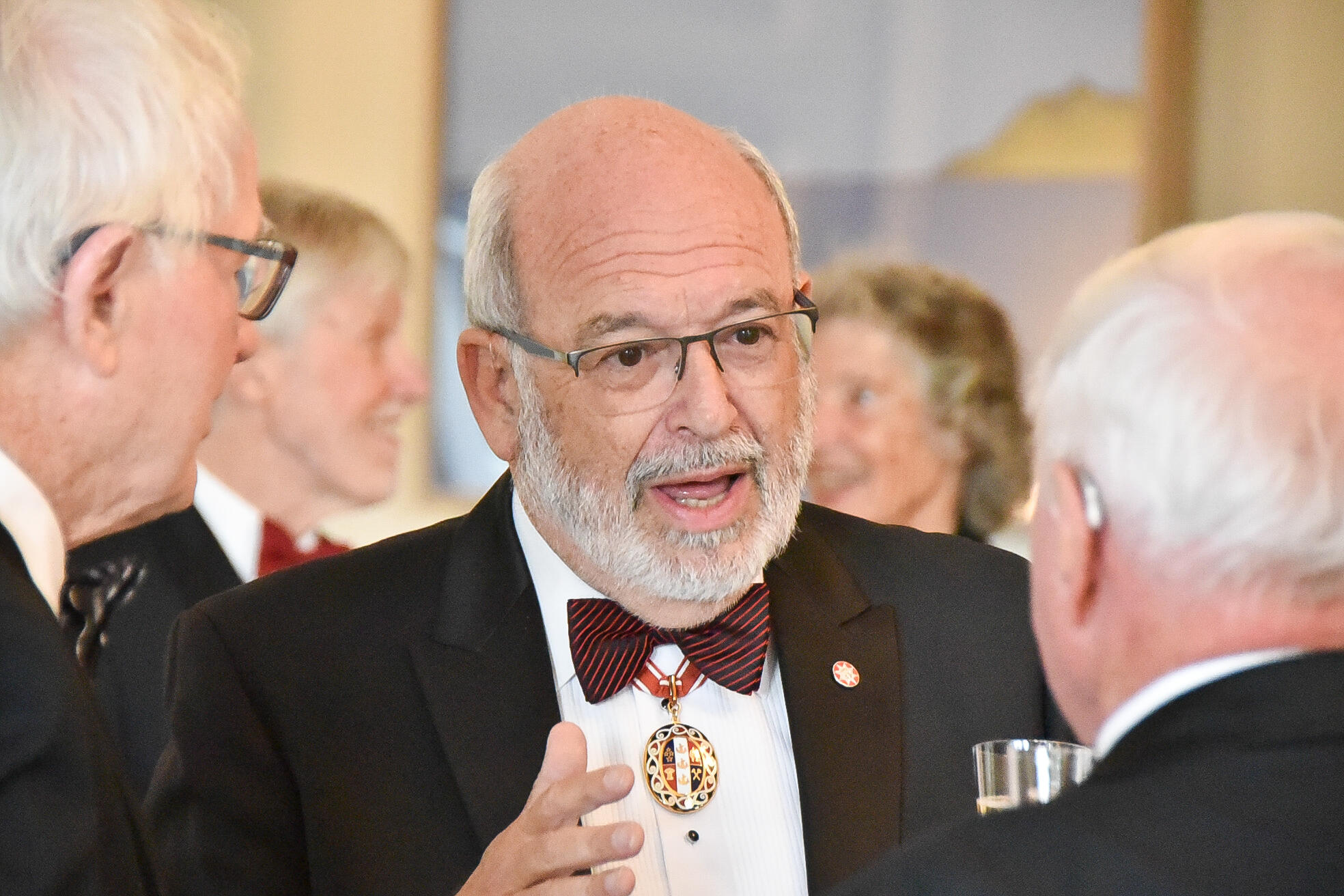

Did you know that New Zealand relied on the British honours system for generations before establishing its own highest national honour? 1
For much of its history, New Zealanders received distinctions through the British honours system. That changed in 1987 with the creation of the Order of New Zealand (ONZ), the country’s highest honour, recognising outstanding service to the Crown and people of New Zealand. With ordinary membership capped at just 20 living people at one time, it remains an exceptionally exclusive national honour for New Zealanders.
📍Year established: 1987. The country’s highest civilian honour, recognising outstanding service to the Crown and people of New Zealand.
📍Ordinary members: Limited to 20 living members. Additional and Honorary Members may be appointed for special occasions; they do not count towards the 20-person cap
📍Appointed by: The King, on the Prime Minister’s advice
📍Post nominal: Members use ONZ after their names.


The Order of New Zealand At A Glance
1987
The Order is instituted by Royal Warrant on Waitangi Day to recognise outstanding service to the Crown and people of New Zealand.
1990
Additional Members are appointed to mark the 150th anniversary of the Treaty of Waitangi and Queen Elizabeth II's visit to New Zealand.
1995
The Queen held a luncheon for the Members at Government House, Wellington.
2002
Additional Members are appointed for the Golden Jubilee of Queen Elizabeth II.
2007
Additional Members are appointed to mark the 20th anniversary of the Order; a dinner is held at Government House, Wellington
2012
Additional Members are appointed for the Queen’s Diamond Jubilee.
2022
Additional Members are appointed for the Queen’s Platinum Jubilee.
2023
Additional Members are appointed to mark the Coronation of King Charles III; Queen Camilla is among those appointed.
Origins and purpose
The Order of New Zealand was established by Queen Elizabeth II on 6 February 1987, Waitangi Day, during David Lange’s premiership.
Modelled on Britain’s Order of Merit and Order of the Companions of Honour, it recognises outstanding service to the Crown and people of New Zealand. Unlike honours that confer titles such as Sir or Dame, the ONZ recognises exceptional contribution without bestowing a title. 2
How appointments work
Appointments to the Order of New Zealand are made by the King as Sovereign of the Order, on the recommendation of the Prime Minister.
Under the Order’s statutes, each appointment is formalised by a Warrant under the Sovereign’s Sign Manual, sealed with the Seal of New Zealand and countersigned by the Prime Minister and the Secretary and Registrar. The appointment is then published in the New Zealand Gazette. 3
Membership types and limits
There are three membership categories for the Order of New Zealand: Ordinary, Additional, and Honorary. 4
Ordinary
- Applies to citizens of New Zealand or citizens of Commonwealth realms where the King is Head of State.
- Capped at 20 living people at one time.
Additional
- Applies to appointments made to commemorate an important royal, state or national occasion.
- Does not have the 20 people limit.
Honorary
- Applies to citizens of Commonwealth countries where the King is not Head of State, or foreign nationals.
- Does not have the 20 people limit.
Additional appointments have been associated with significant occasions including 1990, 2002, 2007, 2012, 2022 and 2023.
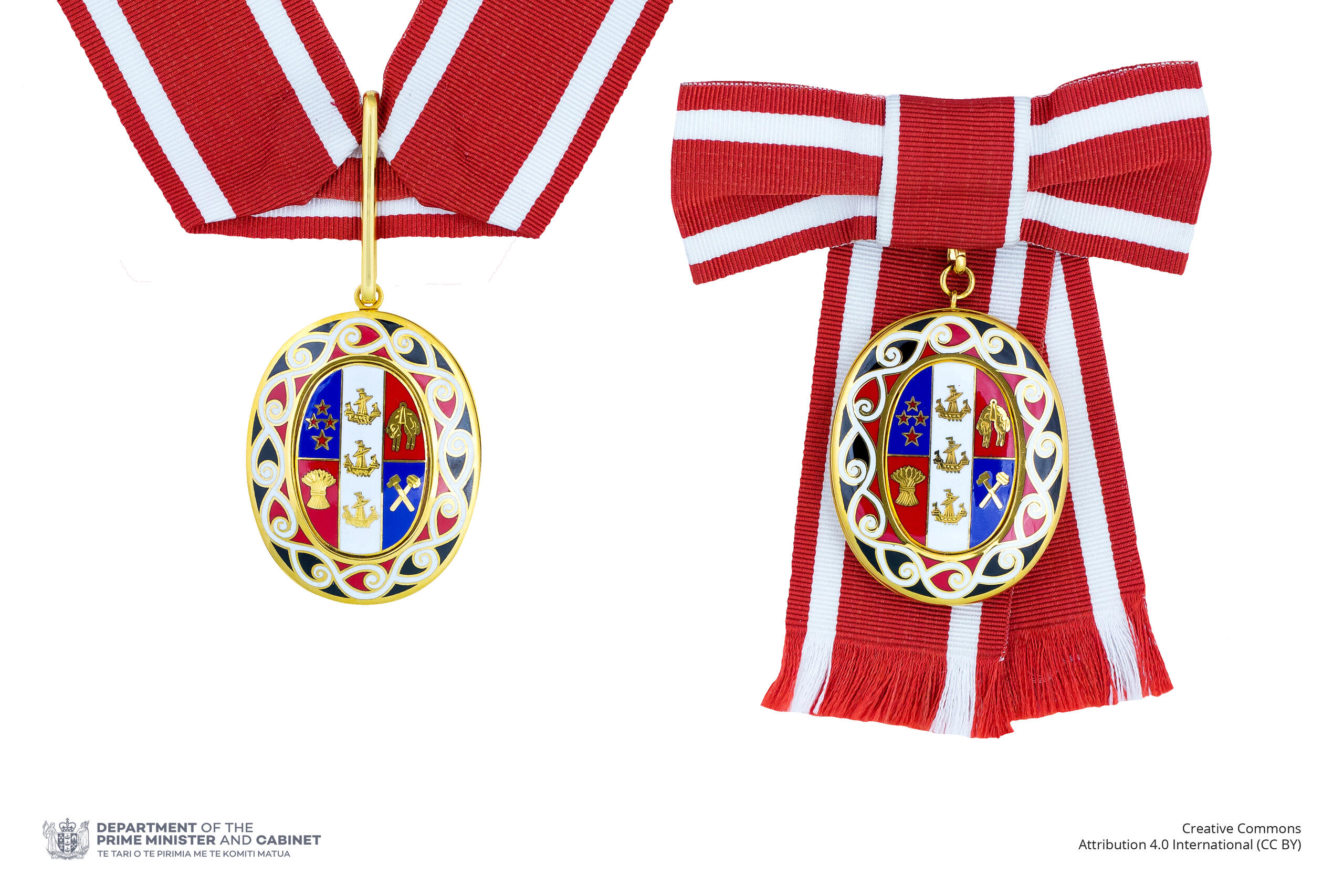
Insignia and symbols
Here's an overview of the insignia and symbolic significance of the Order of New Zealand. 5
You might want to learn more about the Order of Canada.
Who Becomes a Member? Typical Profiles and Recent Examples
Now, let's take a look at how one becomes a member of the Order of New Zealand.
What “outstanding service” looks like
To be appointed to the Order of New Zealand, a person must have made an outstanding contribution to the Crown and people of New Zealand. With only 20 living Ordinary Members allowed at any one time, the honour is reserved for those whose contributions have made a significant difference to the country.
This recognition is not limited to those in public service. People may be honoured for their contributions to fields such as the arts, science, sport, diplomacy and education, among others.
Current membership snapshot
According to the official page of the Department of Prime Minister and Cabinet, there are 20 current Members of the Order. 6 The page also lists deceased members separately.
out of the maximum of 20
Current living members
The 20-person limit applies only to Ordinary Members. The eight Additional Members are counted separately, so they don’t take up any of those places. As of the last verified update, there were 12 Ordinary Members, leaving eight places open. It is not a requirement to always have 20 members, as the limit is a maximum cap.
Illustrative living Ordinary Members
Among the members, we have representatives from different fields such as:
Additional/Honorary appointments for special occasions
Additional Members are appointed to mark important royal, state or national occasions rather than through the normal honours cycle. Some examples include:
- The Treaty of Waitangi sesquicentennial in 1990
- Royal Jubilees (in 2012, 2022)
- The Order’s 20th anniversary
- Coronation of King Charles III in 2023
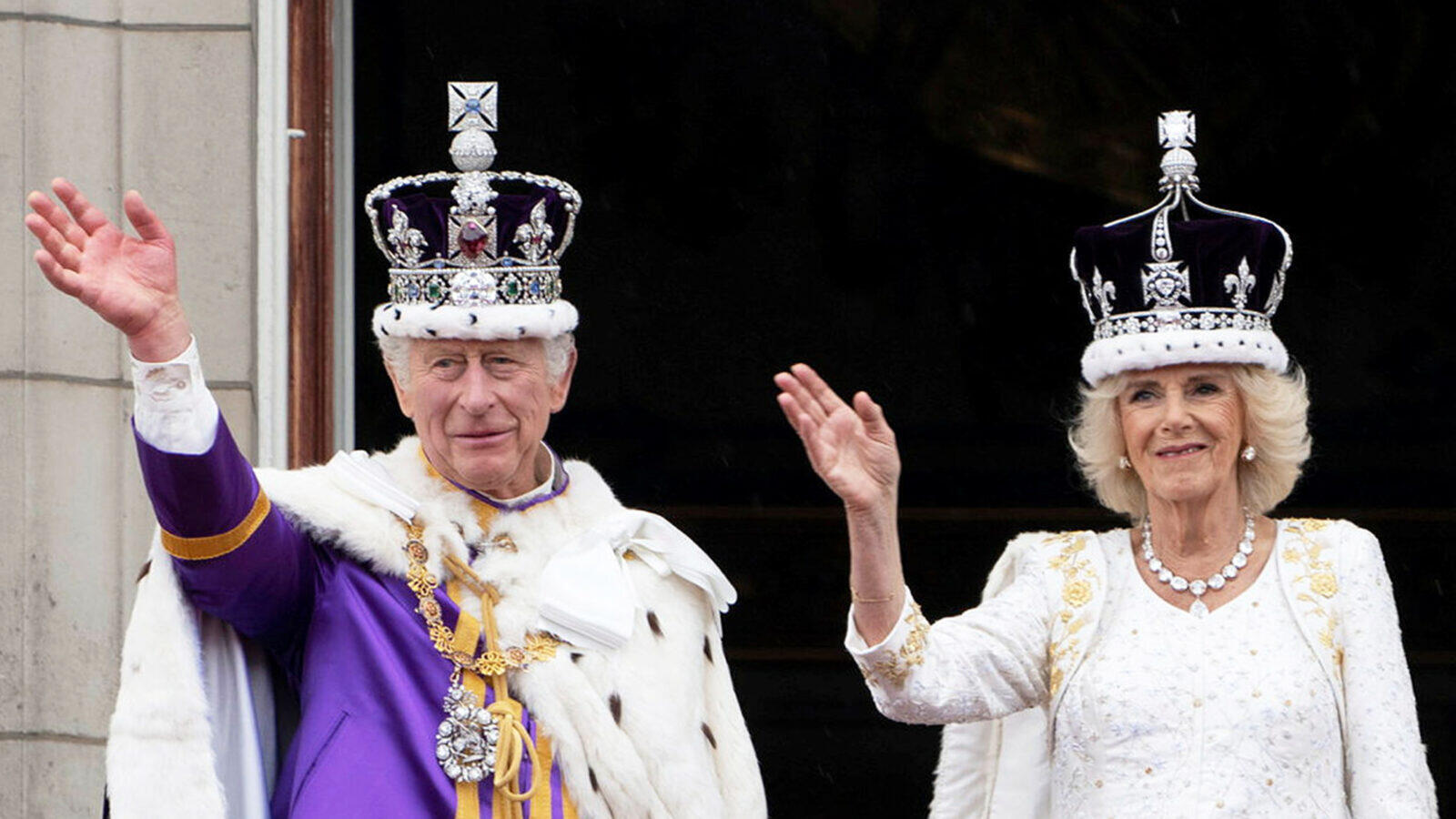
On the other hand, Honorary Members are appointed from outside the group of citizens eligible for Ordinary membership. Neither category counts towards the Order’s limit of 20 living Ordinary Members, although both use the post-nominal ONZ.
| Feature | Additional appointment | Honorary appointment |
|---|---|---|
| Who may receive it | New Zealanders, Commonwealth-realm citizens, or members of the Royal Family; appointments are tied to a special occasion. | Citizens of non-realm Commonwealth countries or foreign nationals. |
| When it is made | Usually for a major royal, state, or national milestone, such as a jubilee or Coronation. | May be made through a regular honours list or a special list, depending on the circumstances. |
| Status | Full membership of the Order, but in the Additional category. | Full membership of the Order, but in the Honorary category. |
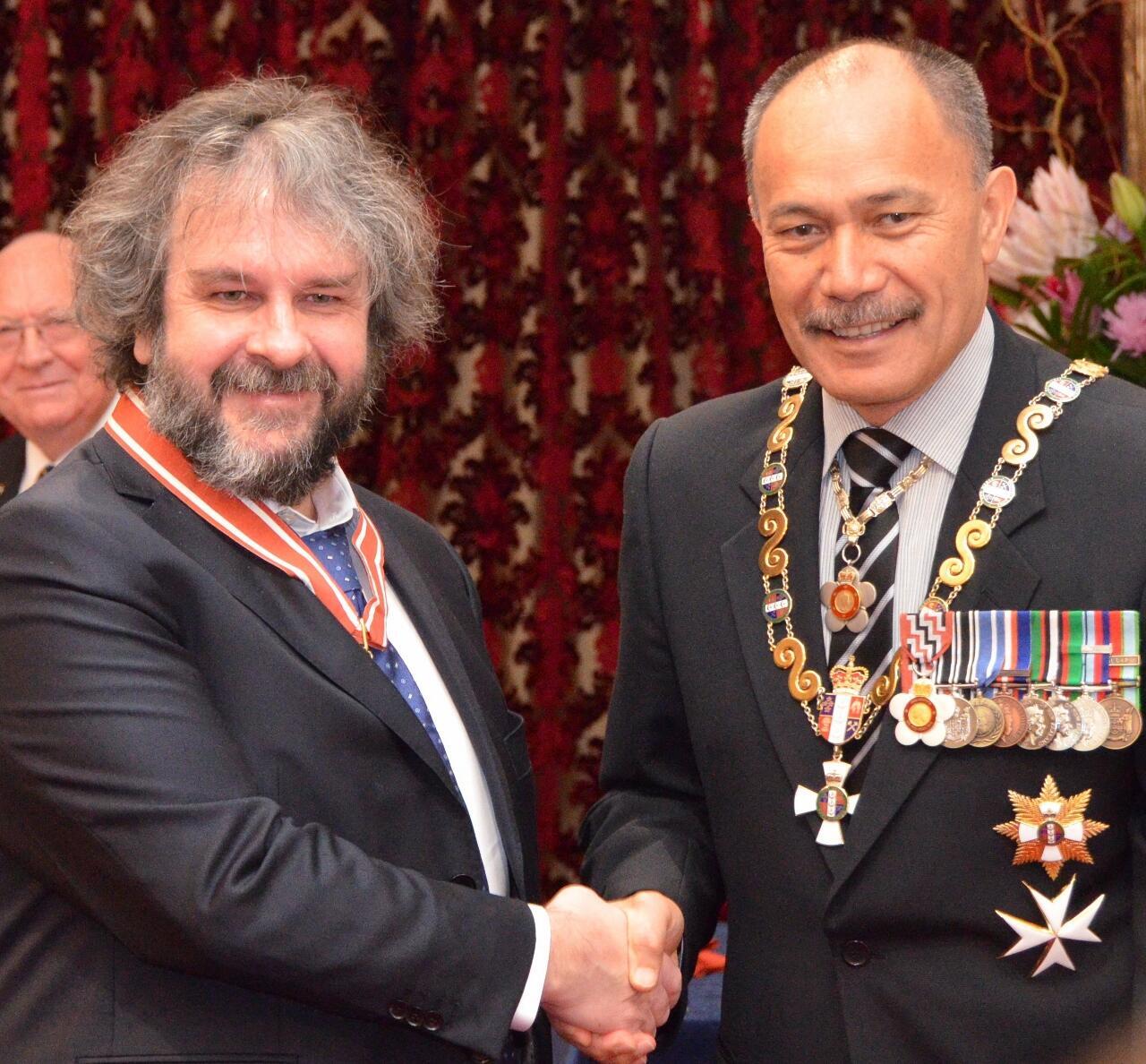
| Past examples | Sir Peter Jackson, the Duke of Edinburgh, Dame Margaret Bazley appointed for the Queen’s Diamond Jubilee in 2012. | Sir Shridath Ramphal, former Commonwealth Secretary-General; Dr William Pickering, appointed in 2002. |
| Recent example | Queen Camilla, appointed on 5 June 2023 “for services to New Zealand” to mark the King’s Coronation. | Fa’amoana Ioane Luafutu, appointed as an Honorary Member in the 2023 King’s Birthday and Coronation Honours List. |
Explore more about the Orders of the Commonwealth.
Order of New Zealand vs New Zealand Order of Merit
The New Zealand Order of Merit (NZOM) is sometimes confused with the Order of New Zealand, but the two are distinct honours within New Zealand’s Royal Honours system.
What’s the New Zealand Order of Merit (NZOM)?
While the ONZ is the country’s highest honour, the NZOM recognises meritorious service and achievement across a wide range of fields, whether it's professional, public, community, cultural, scientific, or other achievements.
Title, level, and post‑nominals compared
Established in 1996, NZOM has five levels where the top two levels may confer the title Sir or Dame on eligible members. 7
| Grade | Example recipient | Official citation / recognition |
|---|---|---|
| GNZM — Knight or Dame Grand Companion | Dame Jacinda Ardern | Appointed a Dame Grand Companion in the 2023 King’s Birthday and Coronation Honours List for services to the State; she was New Zealand’s 40th Prime Minister. |
| KNZM / DNZM — Knight or Dame Companion | Sir Peter Jackson | Appointed a Knight Companion in 2012 for services to film. |
| CNZM — Companion | Arihia Bennett | Appointed a Companion in the 2024 King’s Birthday Honours List; she had previously been appointed an MNZM. |
| ONZM — Officer | Michèle A’Court | Appointed an Officer in the 2023 New Year Honours List for services to the entertainment and comedy industries. |
| MNZM — Member | Dr Haare Williams | Appointed a Member in 2018 for services to Māori, the arts, and education; he was later appointed a Knight Companion in 2023 for services to Māori, literature, and education. |
New Zealand Order of Merit recipients may hold any of the NZOM’s levels, from MNZM through to GNZM or DNZM.
On the other hand, only recipients of the separate, single-class Order of New Zealand may use the letters ONZ as post-nominals.
“Member of the New Zealand Order of Merit” vs “Member of the Order of New Zealand”
The New Zealand Order of Merit (NZOM) and the Order of New Zealand (ONZ) are two separate honours within New Zealand’s Royal Honours system, and a person can receive both during their lifetime.
| Feature | Order of New Zealand (ONZ) | New Zealand Order of Merit (NZOM) |
|---|---|---|
| Position in honours system | New Zealand’s most senior honour. | A major national honour, established in 1996. |
| What it recognises | Outstanding service to the Crown and people of New Zealand, civil or military. | Meritorious service to the Crown and nation, or achievement or distinguished service in a particular field It could range from regional community service to pre-eminent national or international contribution. |
| Structure | Single class. | Five levels. |
| Levels | One level: Member. | GNZM, DNZM/KNZM, CNZM, ONZM, and MNZM. |
| Titles | None; the ONZ is non-titular. | Knights and Dames may be appointed at certain levels, subject to the rules in force at the time. |
| Membership cap | Maximum of 20 living Ordinary Members. | Annual quotas apply to each level. |
| Special categories | Additional and Honorary Members may be appointed for special occasions; they are outside the 20-person cap. | No equivalent Additional/Honorary membership structure. |
How NZOM recipients are chosen and recognised
NZOM recipients are chosen through the same broad public nomination process used across the New Zealand royal honours system. 8
Step 1
Nominations are reviewed by the Department of Prime Minister and Cabinet's Honours Unit and considered by a Cabinet committee chaired by the Prime Minister.
Step 2
The King will then approve the appointments on the Prime Minister’s advice.
Step 3
The appointment is made by a Warrant under the Sovereign’s Sign Manual.
Step 4
The Warrant is sealed with the Seal of the New Zealand Order of Merit.
Step 5
The Chancellor countersigns the Warrant, or the Secretary and Registrar does so acting for the Chancellor.
Step 6
The appointment is announced in an official honours list, normally the New Year or King’s Birthday Honours List.
Step 7
The recipient may receive the insignia at an investiture, often at Government House, Wellington, or another official venue.
Here's an overview of the NZOM annual allocation:
| Level | Post-nominal | Maximum allocation |
|---|---|---|
| Knight or Dame Grand Companion | GNZM | No more than 30 living members at any one time |
| Knight or Dame Companion | KNZM / DNZM | No more than 15 appointments per year |
| Companion | CNZM | No more than 40 appointments per year |
| Officer | ONZM | No more than 80 appointments per year |
| Member | MNZM | No more than 140 appointments per year |
Traditions, Precedence and Protocol for ONZ and NZOM
Both the Order of New Zealand (ONZ) and the New Zealand Order of Merit (NZOM) have their own rules and traditions governing insignia, ribbon, precedence and what happens to the insignia after a member’s death.
Order of precedence and placement
The Order of New Zealand precedes the New Zealand Order of Merit, including its Grand Companion level. This reflects the ONZ’s position as the most senior national honour. 9
When it comes to wearing the insignia, these principles are important:
- Use the correct insignia: The ONZ badge and ribbon are distinct from those of the NZOM and other honours.
- Follow the order-of-wear guidance: The placement of insignia depends on the applicable formal rules and occasion.
- Respect the return requirement: The ONZ badge is to be returned following the member’s death, in accordance with the Order’s statutes.
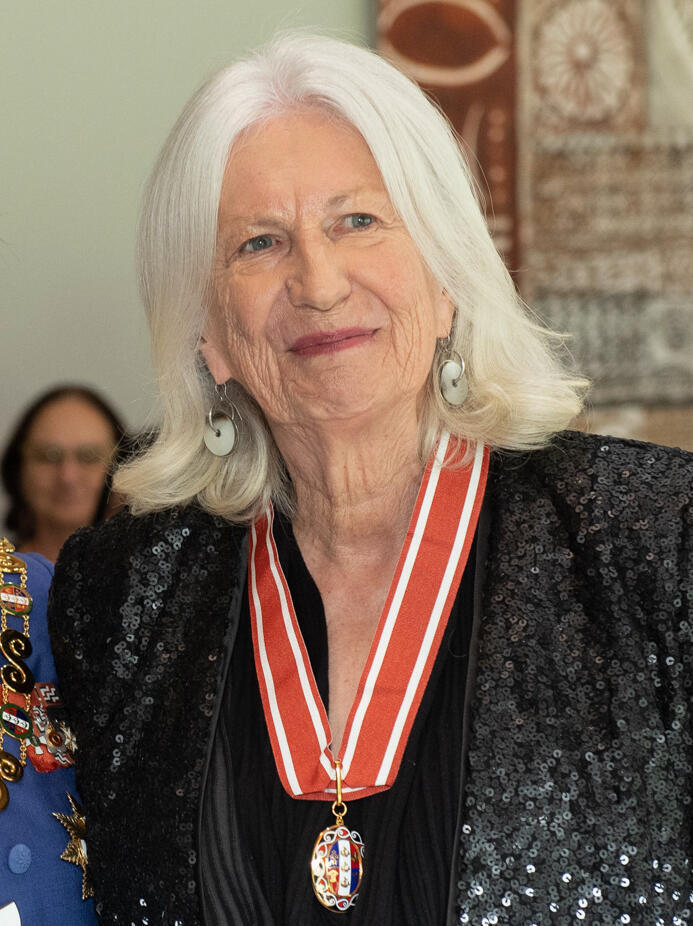
One distinctive feature of the ONZ is that its badge is never worn in miniature.
This differs from the New Zealand Order of Merit, whose members may wear miniature versions of their insignia for evening events and other appropriate occasions.
ONZ members may instead wear a dedicated lapel badge when the full insignia is not being worn. 10
Discover more about the Order of Australia.
How the Honours Process Works in Practice
Anyone can nominate a person for a New Zealand royal honour, including the Order of New Zealand (ONZ). However, appointments to the ONZ are particularly selective.
As the country’s highest honour, it recognises outstanding service to the Crown and people of New Zealand, with Ordinary Membership limited to just 20 living people at any one time.
From nomination to announcement (high level)
If you are planning to nominate someone for the Order of New Zealand, here's a guideline on how to do it step-by-step.
| Step | What to do |
|---|---|
| 1. Check suitability | Consider whether the person’s service is truly outstanding and of national significance. The ONZ recognises outstanding service to the Crown and people of New Zealand. |
| 2. Confirm eligibility | Anyone can nominate someone for a royal honour. Ordinary ONZ membership is limited to 20 living members; Additional and Honorary Members are separate categories. |
| 3. Gather supporting evidence | Describe the nominee’s achievements, impact, duration of service and why their contribution is exceptional. Include relevant documents and supporting letters. |
| 4. Complete and submit the nomination | Complete the official New Zealand honours nomination form and send it, with supporting documents, to the DPMC Honours Unit using the current submission instructions. |
| 5.Acknowledgement and assessment | The Honours Unit acknowledges receipt, advises which honours list the nomination will be considered for, and assesses the case and supporting evidence. |
| 6. Recommendation and nominee consent | Suitable nominations proceed through the honours decision-making process. The Prime Minister submits the proposed ONZ appointment to the Sovereign; the nominee’s willingness to accept the honour is also established through the process. |
| 7. Sovereign approval | The King, as Sovereign of the Order, approves the appointment. It is formalised by a Warrant under the Sign Manual, sealed with the Seal of New Zealand. |
| 8. Official announcement | Successful appointments are announced through an official honours list, usually the New Year or King’s Birthday Honours List, and published in the New Zealand Gazette. |
When announcements usually happen
The regular New Zealand honours lists are published around New Year and the King’s Birthday. Meanwhile, Additional and Honorary ONZ appointments are usually made for special royal, state, or national commemorations.
Investitures and gatherings
Honours are commonly conferred at investiture ceremonies, often held at Government House in Wellington or at other official venues.
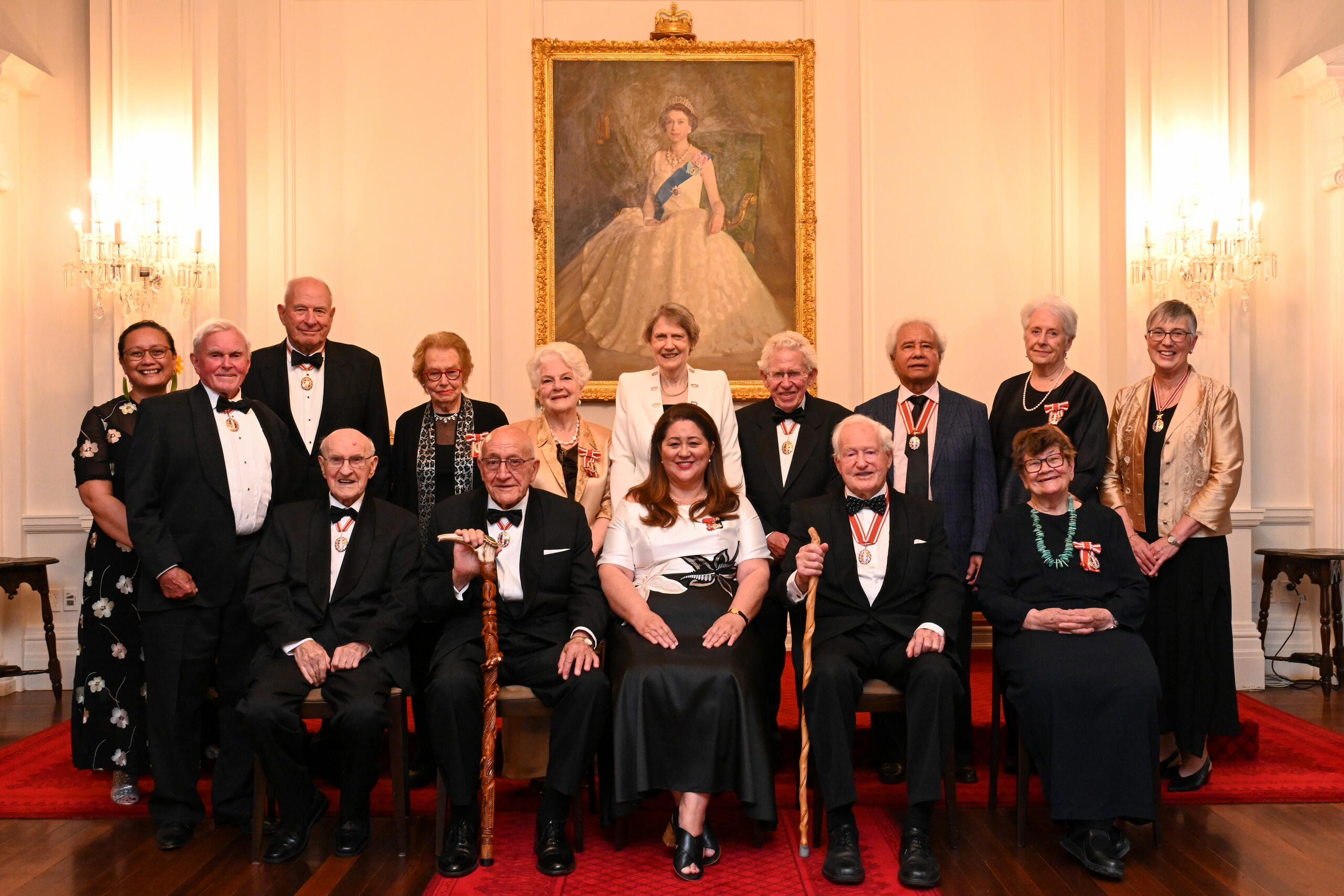
Members of the ONZ also usually meet annually at Government House, Wellington, maintaining a tradition of gathering people whose service has been recognised through the Order. Partners of the late members are also invited for the annual meetings.
Notable Recent Changes for the Membership
The latest Ordinary membership list is always reflected via the DPMC’s current-members page.
Living Ordinary Members
There are currently 12 Ordinary Members of the Order of New Zealand, leaving eight places unfilled.
The membership list reflects the living Ordinary Members, and vacancies can arise through deaths or other changes in membership. These vacancies are not automatically filled in every honours round.
Recent updates
The most recent Additional Member appointment recorded on DPMC’s current-members page is Queen Camilla, appointed on 5 June 2023 to mark the Coronation of King Charles III.
The same page records the deaths of former Prime Minister Jim Bolger on 15 October 2025 and former senior jurist Sir Kenneth Keith on 13 May 2026.
We hope you have enjoyed reading this article about the Order of New Zealand and its importance as part of the New Zealand royal honours system.
Sources and further reading
- “History.” Department of the Prime Minister and Cabinet (DPMC), 27 Aug. 2025, https://www.dpmc.govt.nz/our-programmes/new-zealand-royal-honours/new-zealand-royal-honours-system/history. Accessed 21 Oct. 2026.
- “The Order of New Zealand.” Department of the Prime Minister and Cabinet (DPMC), 5 Nov. 2025, https://www.dpmc.govt.nz/our-programmes/new-zealand-royal-honours/new-zealand-royal-honours-system/components-new-zealand-royal-honours-system/order-new-zealand. Accessed 21 Oct. 2026.
- Her Majesty’s Command. “New Zealand Legislation.” New Zealand Legislation, 2021, https://www.legislation.govt.nz. Accessed 21 Oct. 2026.
- Force, New Zealand Defence. “The Order of New Zealand (ONZ).” Nzdf.Mil.Nz, 2 July 2024, https://www.nzdf.mil.nz/medals-and-service-records/medals-and-awards/explore-medals-and-awards/the-order-of-new-zealand/%7Bhttps://www.nzdf.mil.nz/medals-and-service-records/medals-and-awards/explore-medals-and-awards/the-order-of-new-zealand/%7D. Accessed 21 Oct. 2026.
- “Insignia of the Order of New Zealand | Department of the Prime Minister and Cabinet (DPMC).” Govt.Nz, 2026, https://www.dpmc.govt.nz/image-galleries/2469/media. Accessed 21 Oct. 2026.
- “Current Members of the Order of New Zealand.” Department of the Prime Minister and Cabinet (DPMC), 31 Dec. 2020, https://www.dpmc.govt.nz/publications/current-members-order-new-zealand. Accessed 21 Oct. 2026.
- “The New Zealand Order of Merit.” Department of the Prime Minister and Cabinet (DPMC), 7 May 2024, https://www.dpmc.govt.nz/our-programmes/new-zealand-royal-honours/new-zealand-royal-honours-system/components-new-zealand-royal-honours-system/new-zealand-order-merit. Accessed 21 Oct. 2026.
- Her Majesty’s Command. “New Zealand Legislation.” New Zealand Legislation, 2021, https://www.legislation.govt.nz. Accessed 22 Oct. 2026.
- Department of the Prime Minister and Cabinet. Seniority of Various New Zealand Royal Honours. Royal honours guide, 18 Dec. 2024, https://www.dpmc.govt.nz/sites/default/files/2024-12/seniority-various-nz-honours-dec24-v2.pdf. Accessed 21 Oct. 2026.
- “Order of Wear: Orders, Decorations and Medals in New Zealand.” Department of the Prime Minister and Cabinet (DPMC), 8 May 2024, https://www.dpmc.govt.nz/our-programmes/new-zealand-royal-honours/honours-lists-and-recipients/information-honours-recipients/order-of-wear-orders-decorations-medals-in-new-zealand. Accessed 21 Oct. 2026.
Summarise with AI:
Did you like this article? Leave a rating!

 Loading...
