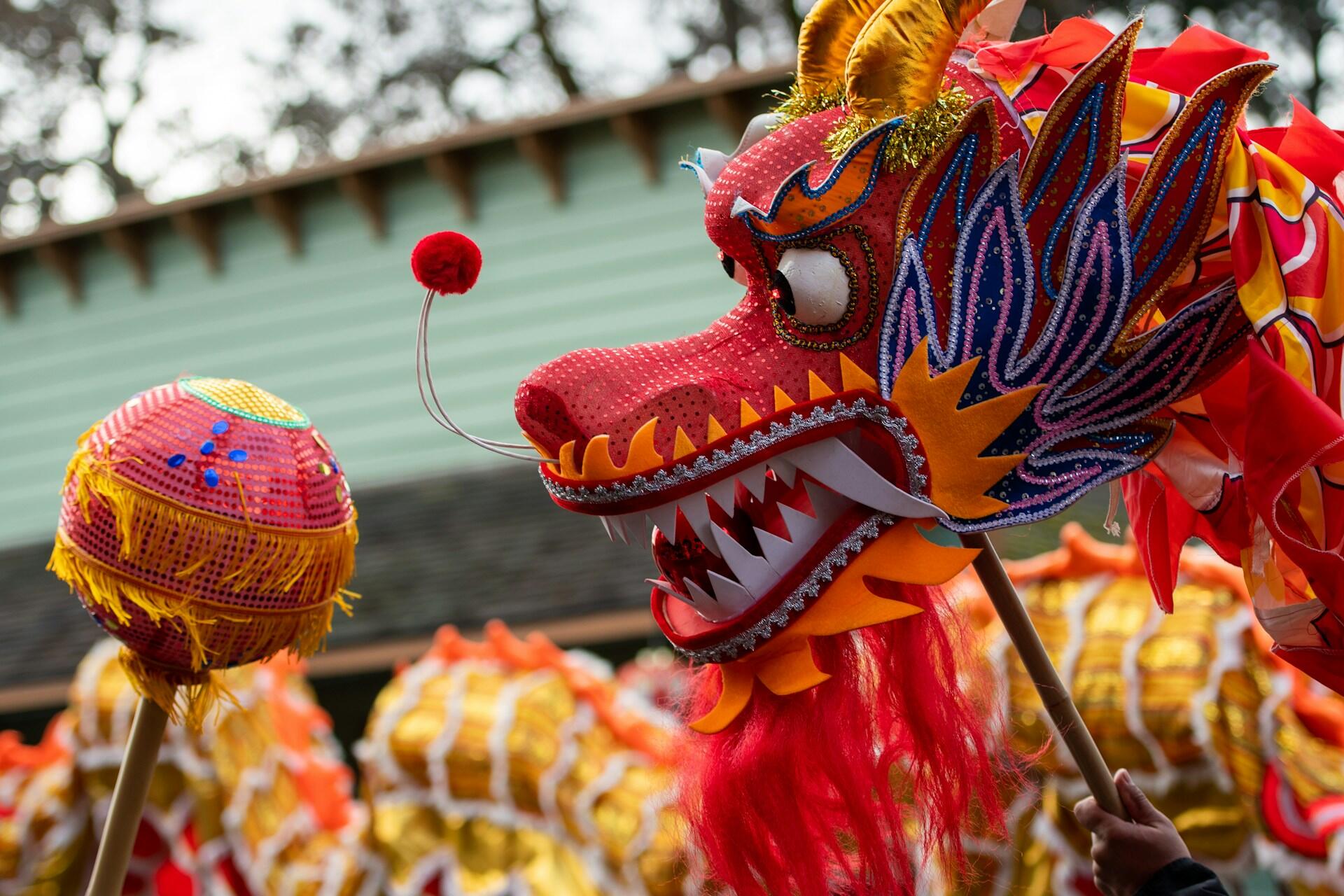
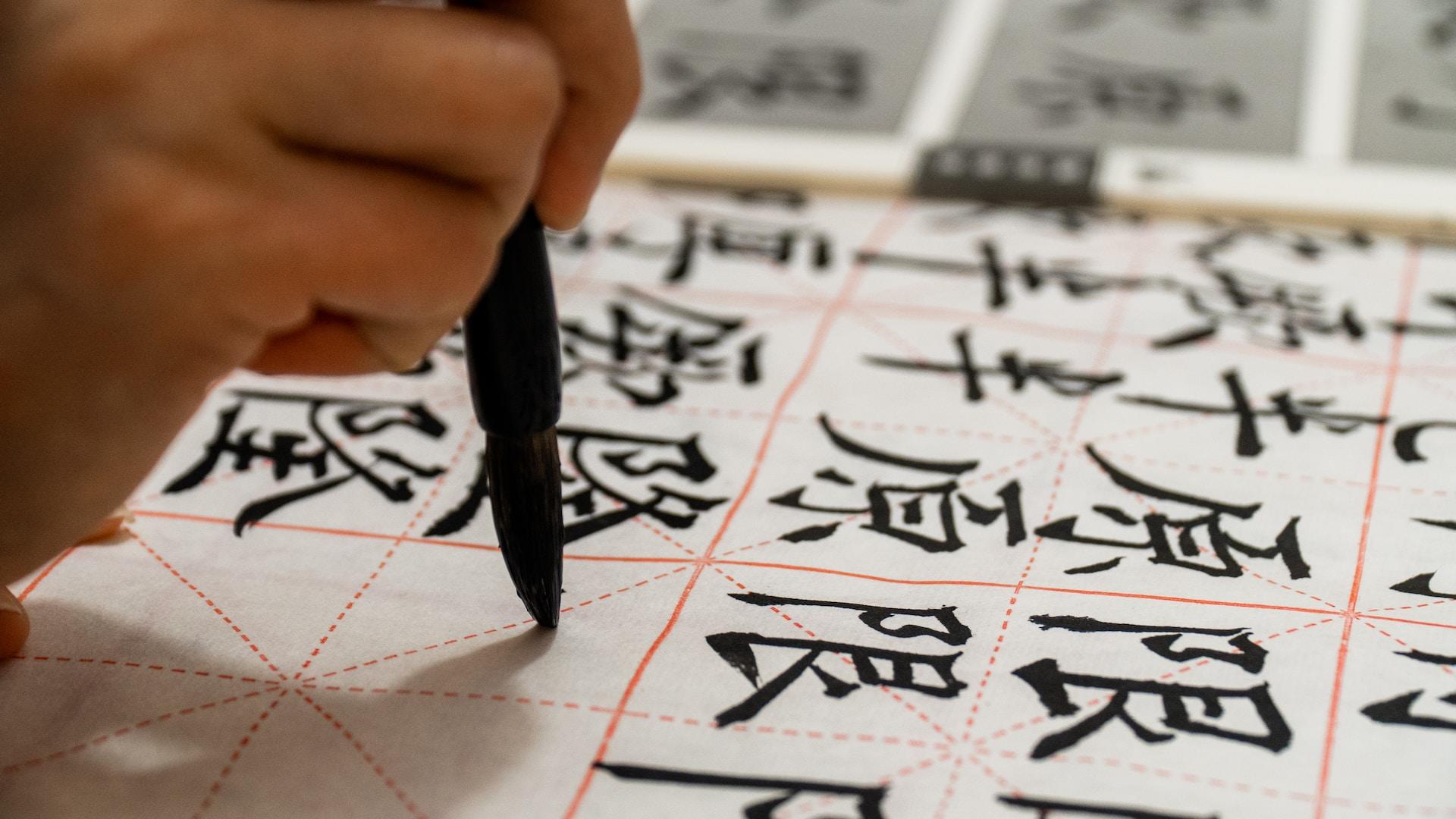
When you decide to learn Chinese, you are normally thinking about the Mandarin language. Although we will refer to Mandarin and Chinese interchangeably within this article. There are actually 299 living Chinese languages in China, which is why Mandarin is called mandarin and not just Chinese. Chinese Mandarin is the most widespread language in China, Wikipedia suggests that it is spoken by more than 1.3 billion people in China as a first language. Yes! That’s right not everyone in China speaks Mandarin as a first language. Although the majority, are likely not complete beginners like you are. As they probably would have had a better immersion into the language since they live in China. So the Chinese person who appears to be a "native speaker" may have had to learn Mandarin London just like you. Learning Mandarin Chinese can be intimidating, mastering Chinese grammar, vocabulary, pronunciation, Chinese speaking and conversation. Could be the things that scare a learner of the mandarin language the most, especially when you consider the five tones, words, and phrases used by Chinese people fluently. Which are not easy to understand for English speakers (or other speakers of European languages) who are absolute beginners and who are accustomed to the Latin alphabet and language structure. But when beginners plan to learn a new language, we can count on one thing, that our comprehension of that language will remain limited unless we study. In this action-packed article, you will discover and explore Chinese conjugation, how the native speaker expresses time, the most commonly used Chinese verbs, the construction of a sentence in Mandarin and different tones to use for speaking. You will discover Chinese pronunciation, as we use Chinese pinyin (Chinese Romanised system for the foreigner), throughout this article. It will not replace your Chinese lessons by any means, but it will support your learning experience. On your marks, let's go! Learning Chinese Mandarin. Photo Source: Unsplash
One of the first things that could come to mind when you plan to learn Chinese is how to express time and how long it will take to memorize long verb drills. Just like you do when you plan to learn Italian, learn Spanish or French. While memorizing verbs may be time-consuming, it is easily understandable for the English speaker who has the equivalent form in English. In English and most European languages, each and every verb that you learn comes in 3 main tenses the past the present and the future. When you communicate you have to think in advance about which time you want to express. If it happened yesterday, you would use the past tense for example. But to get even more precise, English speakers also have to use the main time categories of Simple, Perfect, Perfect Continuous and Continuous and this is not to mention the conditional conjugations. This means that for each and every English verb, you must know at least 12 combinations of how it can be used and there are thousands of verbs. The good news is that there are no time-based verb tense conjugations in Chinese not even small ones. Nor are there any additional structures that need to be added to your verb that change it. Verbs in Chinese always remains unchanged in the infinitive form. In Chinese culture, temporal markers are used to express whether we are communicating in the past, the present, the future or the conditional. To speak Chinese well, you should memorize this vocab. The three most common markers for the past:
To express a past experience within an unspecific period of time, you can use the verb suffix 'guò', for example - Wǒ yǐjīng chīguò zǎocānle - I have already eaten breakfast.
To express completed actions which it is essential to note can be within past, Present or for the immediate future. You can use the particle 'le' after the verb, for example - Wǒ zhǎodàole yī zhǐ gǒu - I found a dog.
To express completed actions that were not complete or never happened you can use 'méi' or 'méiyǒu', for example - Wǒ méiyǒu cānjiā huìyì - I didn’t have the meeting.
There are of course other markers that you can use too, but these are some of the more commonly used suffixes and particles. The two most common markers to speak fluently about the present:
To express an action in the present, you can use Zhe. For example - Wǒ xiàozhe kū - I laugh and cry.
For something to be in process use zhèngzài. For example - zhè gè guójiā zhèngzài fāzhǎn zhōng -This country is developing.
The three most common markers for the future:
If you wish to express want you can use Yào which is the equivalent. For example, Wǒ yào qù bìlǔ - I am going to Peru.
To show a thing in the distant future, use Jiāng. For example qǐng shāohòu, wǒ jiāng wèi nín zhuǎnjiē - Please wait, we're transferring you.
yǐhòu Has several meanings and should be used if you want to say 'after', 'in the future', 'soon' and 'later'. For example liù xiǎoshí yǐhòu - 6 hours later.
Finally, the last form to be explained will be the passive form, which has specific rules in Chinese, it generally expresses a negative. Here is the primary marker: The primary marker to use to express the passive form is ‘bèi’. But using this does have rules associated with it, which when followed allow you to speak correctly. When using bèi, Chinese learners must remember the following :
The primary object will become the subject of the sentence.
The sentence structure should contain a particle or object with the main verb.
An example of how to use bèi in a sentence:
Zhè jiàn yīfú bèi fàngxiàle - The dress was put down.
Now let',s take a look at the most common verbs in Chinese Mandarin. Take Mandarin classes London now! There are lots of benefits of learning to speak Chinese. Photo Source: Unsplash
The Most Commonly Used Chinese Verbs
For a beginner to Chinese language learning, thinking about conjugating Chinese verbs can seem complicated. But I just want to remind you of the good news, Chinese verbs do not need to be conjugated, because Chinese verbs remain in infinitive form. Don't forget that! As it is an essential piece of information and can help you lower your anxiety to Chinese learning. As for the temporal markers, the verb will be associated with post-verbal particles in the sentence which make it possible to express:
Aspects of things.
Order of things.
Specific processes.
Weather Terminology.
For example, these particles may mark time and appearance.
For example, Nǐ jiào shénme? - what is your first name?
In addition to particles, we can find auxiliary verbs to support communication too:
How To Build Sentences In Chinese With The Verb 'To Be'?
The verb 'to be' in English is a very flexible and commonly used verb, but that does not always translate literally into the Chinese equivalent of the verb 'shì'. In Chinese language and culture, 'to be' is actually translated into a number of verbs. If you want to be fluent in Mandarin, it is a good idea to learn the word order and how these Chinese words are used. Here are some examples:
Yǒuyǒng - To be Useful
Yǒuxiào - To be Valid
Yǒumíng - To be famous
yǒu yìsi - to be Interesting
yǒuqián - To be rich
Also, there are some verbs that we call qualitative, which express a state by being associated with the verb "to be":
hǎokàn - To be beautiful
dáà - To be big
xiǎo - To be small
guì - To be expensive
Here are also some action verbs that a good to learn while learning Mandarin Chinese : The main action verbs are:
xiě - to write
Yôu - To have
zuò - To sit
xuéxí - To Learn or study
tíngzhǐ - To Stop
kàn - to Look
zǒu - To go
nǎ - To take
pǎo - To run
maí - To buy or sell
If you are planning a trip to China, or merely to want to immerse yourself in Chinese culture to become bilingual, using these common verbs will be essential. Find a good Mandarin course on Superprof.
How To Successfully Build Sentences In The Chinese Language
Chinese is one of the oldest languages in the world and while it may seem like an intimidating language to learn thankfully making sentences in Mandarin Chinese is relatively easy. According to the BBC, the average scholar knows around 8,000 words, and you can get by with approximately 3,000 words and even have enough knowledge to read a newspaper. Aside from that good news you also don’t need to conjugate words or verbs, imply gender, imply time frames, there is also no singular or plural. So all you have to do is learn how to read, speak and write up to 3,000 words and then understand how to fit them together in a sentence. Although this still sounds like a lot if you can learn 3 new words every day Hey presto! You will be speaking Chinese fluently within a few years. This is why it can be very beneficial to students learning Mandarin to start with learning by sentence structure. In fact, constructing a sentence in Chinese has 3 different rules :
Either it will be is a subject + predicate construction,
Or it will be a construction will a subject + verb + complement (80% of Chinese sentences),
Or it will be a complex construction, to mark a negative (e..g no) or interrogative sentence( e.g. Question).
In fact, if:
The sentence is a question, we add Mǎ.
The sentence is negative, we add bù.
The sentence has a time-sensitive element, we can add le.
Simple Sentences
Let’s take a look at how the simple sentence is constructed in Chinese. First of all, it is important to remember that the placement of the verb is essential. So that the sentence is understandable, the verb must always be after the subject. There can be two situations:
Subject + predicate (for example Chinese drink tea = Zhōngguó rén hē chá).
Subject + verb + complement (For example I want to eat Chinese dumplings = Wǒ xiǎng chī zhōngguó jiǎozi).
Complex Sentences.
With regard to complex sentences, the interrogative sentence follows the construction of:
For example: Do you want to eat Chinese dumplings = Nǐ xiǎng chī zhōngguó jiǎozi ma?.
Ready to switch to Chinese tones? How to speak Mandarin without Verb tenses. Photo Source: Unsplash
What Are The Five Tones In Mandarin?
Mandarin Chinese has 5 tones which clarify the meanings of the words when the pitch is correctly spoken. However, when the pitch is spoken incorrectly, it can cause great miscommunication. In Mandarin, even words that look the same can have a different meaning based on the tone used to say the word.
The first tone is neutral and highest tone.
The second tone rises from the middle tone towards the highest tone.
The third tone falls low and rises up to the highest sound.
The fourth tone falls from high to the lower tone.
The neutral tone also called the "fifth tone" is like a short mid tone exclamation.
To make it easier to identify how to read and pronounce tones in Chinese, PinYin was created. This is the romanized form of Chinese and it makes it easier for anyone learning Chinese, to understand which Chinese tones belong to which words. This is done by adding accents to the letters. Example of similar words changing their meaning based on the written accent:
The first tone:mā (the mother).
Second tone: má (hemp).
Third tone: mǎ (horse).
Fourth tone: mà (curse).
Fifth tone: ma (to highlight a question and other things)
While the tones in Mandarin may sound very foreign to you, we already use many similar tones when we speak English every day. Learning how to say the Chinese tones based on intonations that you already use in English can go far in helping you to remember the tones and learn to use them fluently. How to say the different tones based on English words or expressions
The first tone sounds like when you are thinking about an answer and say ‘errrrrr’.
The second tone has a questioning sound like when you answer the phone ‘Hello?’
The third tone is a mix of suspicion and surprise like when given an unexpected gift ‘Really?!!’
The fourth tone is like an exclamation of pain ‘Aow!!’
The fifth tone is a bit more complicated as it doesn’t have its own tone. But in many cases when it is spoken, it is spoken quickly with a short and sharp sound. As if tapping your finger once on a desk.
I hope that with your Chinese lessons and the guidance in this article on the Tones, verbs, sentence structure and ways to express time. That your Chinese language learning grows in confidence and fluency, supporting you towards success. Zhù hǎo yùn!! (good luck!!) Find Chinese classes London here on Superprof.
The Art of Kung Fu and Other Chinese Fighting Styles Around the world, many people watch Chinese kung fu movies because the action is amazing. But disciples who train in a Chinese martial art know it's more than a fighting style; it's a way of life. For the rest of us, learning about Chinese martial […]
Important Holidays in China: Celebrations, Traditions, and Dates Compared to many nations, China's holiday calendar revolves less around commemorating wars won and past leaders' deeds and more around cultural values. Throughout the year, Chinese people have days reserved to venerate their ancestors, celebrate legends, and hail the promise of a bright future. The only wholly […]
Best Way to Learn Chinese by Yourself Thanks to popular media, such as TV shows, movies, and video games, learning Mandarin Chinese on your own is now more feasible and useful than ever! Streaming platforms in the UK offer a vast collection of Mandarin-language material. With the help of these tools, you may improve your […]
Profiles of Renowned Chinese Figures Throughout History Get ready to travel back in time. Discover more about China's history through our list of the most famous Chinese people. Through this comprehensive guide, discover notable Chinese personalities, spanning from the best martial arts actors to famous entrepreneurs, who have shaped China's rich history. Discover who the most […]
Chinese New Year Traditions and Other Facts to Know 新年快乐! - xin nian kuai le! (Happy New Year!) Standard Chinese New Year Greeting Around the world, many countries enjoy celebrating two New Years. Yet, somehow, the Chinese New Year gets all the attention, and all the credit. Perhaps it's because China is home to such […]
What Is My Chinese Zodiac Sign? In Western cultures, zodiac predictions or horoscopes — are commonly viewed as light-hearted guidance. In many Asian cultures, however, zodiac systems hold deeper cultural significance and are closely tied to personality traits and life paths. Use our Chinese zodiac calculator to find your animal, then explore its temperament, strengths, […]
How to Navigate Essential Expressions in Mandarin Native English speakers enjoy a great privilege. English is the language of medicine, science, aviation and many other fields. Thus, practically every nation includes English language lessons in their schools' core curriculum. Almost everywhere you go, speakers of other languages (should) have no problem understanding you. On the […]
Planning a Trip to Hong Kong “He who never leaves his country is full of prejudices.” - Carlo Goldoni The world is full of tourist destinations, but there are different places for different people. With its skyscrapers, shopping, nightlife, and unmissable sights, Hong Kong is a pretty versatile destination. This versatility is why most people […]
The Enchanting Mythology of China For all that China is thought to be irreligious, the people have religious figures aplenty to pray to. Not just the Buddha or the practice of Taoism - or, for that matter, praying at a Confucian temple, either! The Chinese God in Heaven is an enduring folk tale. Nuwa, the […]









 Loading...