

Flag football combines the strategy and excitement of American football with a non-contact format that makes the sport accessible to players of all ages and abilities. Instead of tackling, defenders stop the ball carrier by pulling one of two flags attached to their belt, creating a game that rewards speed, teamwork and quick decision-making. As participation continues to grow around the world and the sport prepares to make its Olympic debut at the Los Angeles 2028 Games, there has never been a better time to learn the rules, understand the different positions and discover how to get started. How do you play flag football? How long are flag football games? When does flag football start for the season? Here are all your questions, answered! Let's get started!
Together, we are determined to use this incredible stage to showcase the best of flag football — its speed, athleticism and creativity.
Diana Flores, Mexico national team quarterback, World Games gold medallist and Chair of the IFAF Athletes’ Committee, speaking after flag football was confirmed for the Los Angeles 2028 Olympics.


What Is Flag Football?
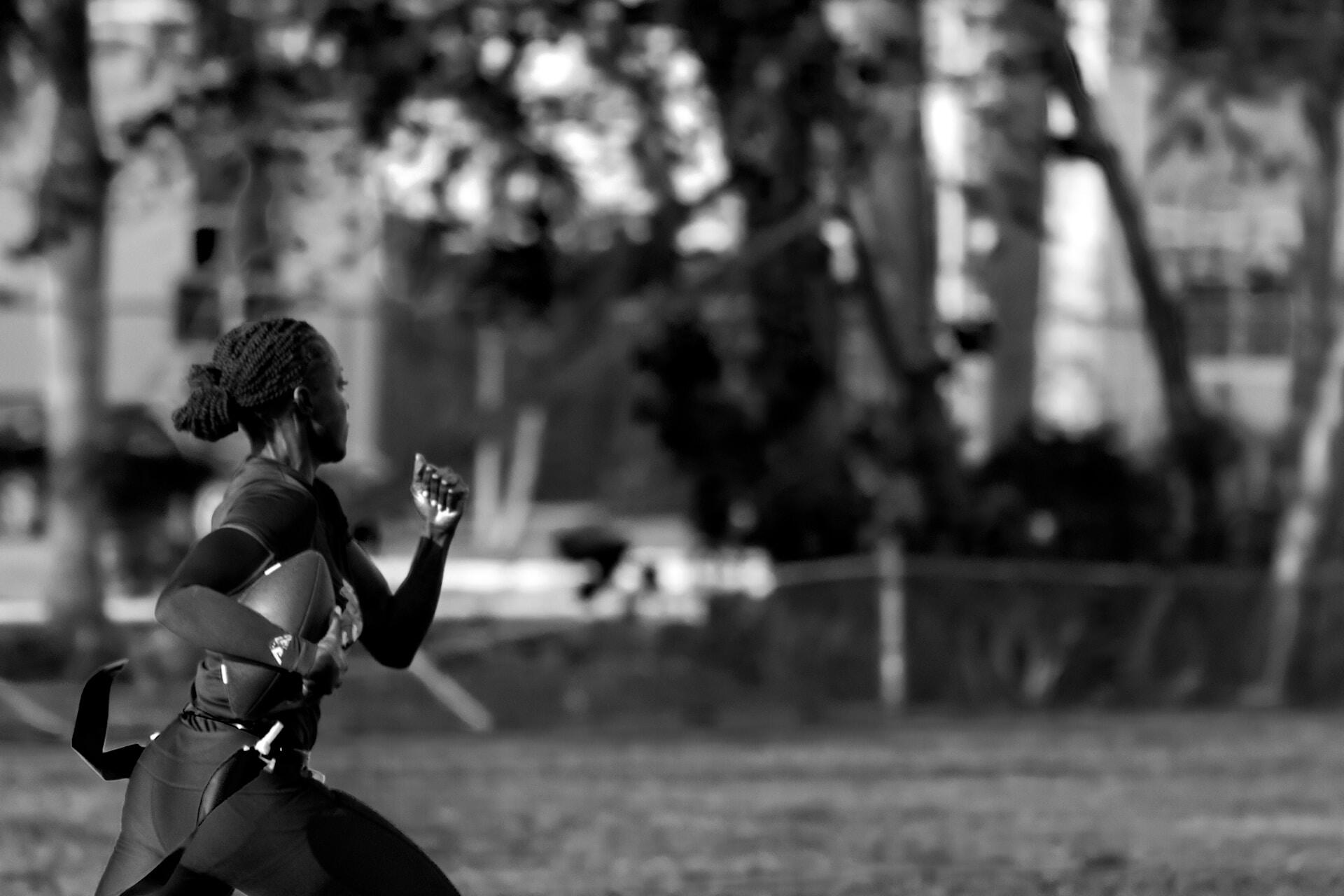
How do you play flag football? Flag football is a version of American football that replaces tackling with flag pulling. Each player wears a belt with two flags attached to either side of their hips. When a defender removes one of the flags from the ball carrier, the play ends immediately. The aim of the game is the same as tackle football. Teams move the ball down the field through passing and running plays to score touchdowns while preventing their opponents from doing the same. Although the basic principles are familiar to anyone who has watched American football, the lack of physical contact changes the pace and style of play.
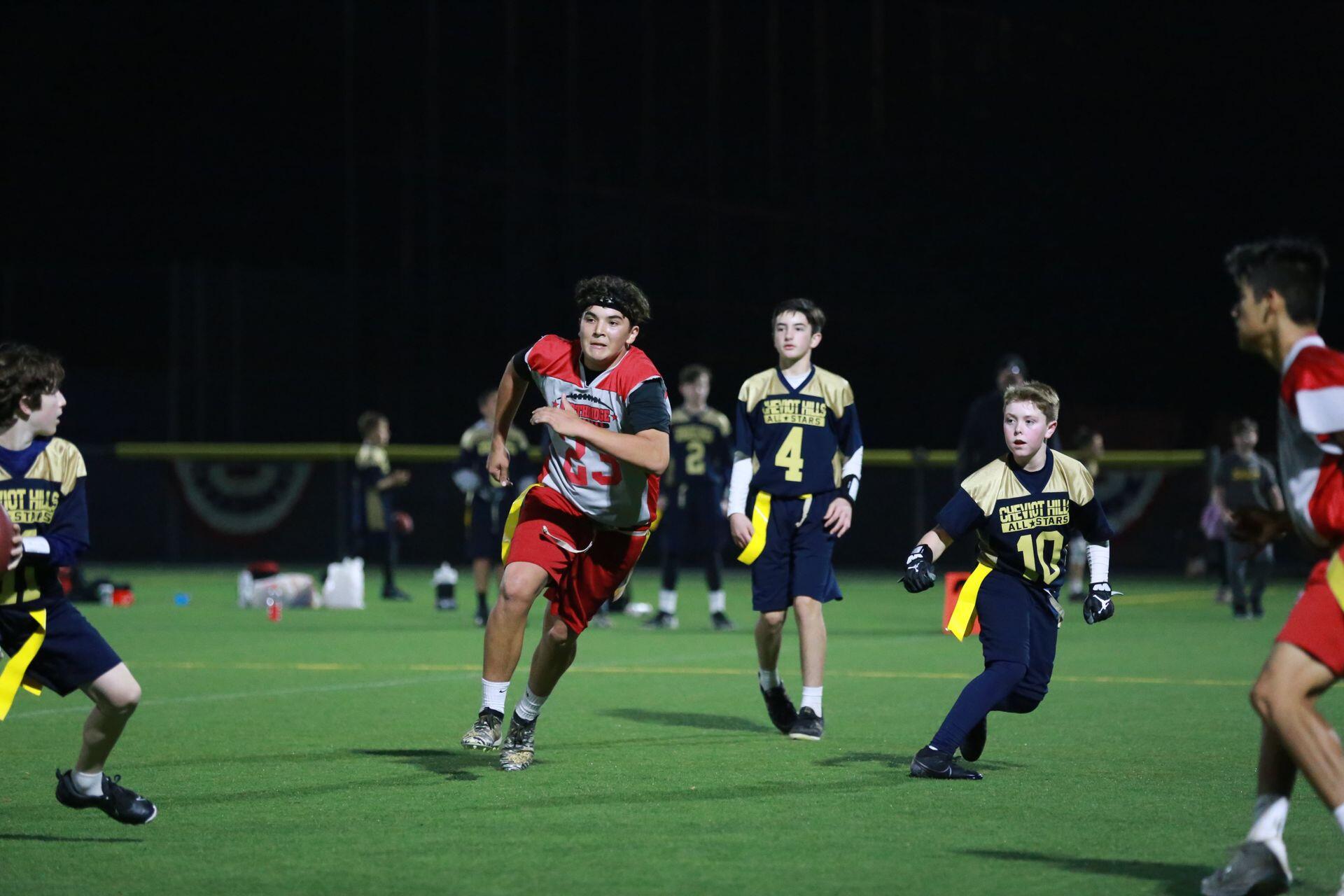
Because players do not need helmets or shoulder pads, flag football is less expensive to play and easier for schools, clubs and community organisations to introduce. The reduced risk of injury has also made it popular with families, adult recreational leagues and mixed-gender competitions. Today, millions of people play flag football across more than 100 countries. The sport is governed internationally by the International Federation of American Football (IFAF), which has helped expand world championships and international tournaments. Its biggest moment is still to come, however, with flag football making its Olympic debut at the 2028 Summer Games in Los Angeles.
🚫 Non-contact format
👧👦 Suitable for children and adults
💷 Lower equipment costs than tackle football
🏃 Easy to organise and play
👩🤝👨 Mixed teams are common
🥇 Olympic sport from 2028
Would you like to learn more on the different flag football positions?
How to Play Flag Football
How does flag football work? Flag football is easy to learn, but mastering the game takes practice. Teams take turns attacking and defending, with the offence trying to score and the defence attempting to stop each play by pulling a flag instead of making a tackle. Most games begin with possession at a designated yard line rather than a traditional kickoff. The offence has a limited number of downs to move the ball far enough for another set of downs or reach the end zone. If they fail, possession changes to the opposing team. Quick passing, sharp route running and communication often make the difference between winning and losing. Strength still matters, but speed, agility and tactical awareness are usually more important.
Flag football games are usually 40–50 minutes long. Most games have two 20-minute halves with a short halftime. With breaks and timeouts, the whole game usually takes about an hour.
Basic Rules and Game Objectives
Although leagues can use slightly different rules, the basics remain consistent. A touchdown is worth six points in most competitions. Teams can then attempt an extra point from a designated distance. Some leagues also award two points for a successful conversion from further back. Instead of tackling, defenders pull a flag from the ball carrier's belt. Once a flag is removed, the play is over and the ball is spotted where the flag was pulled.
Other common rules include:
- No tackling or unnecessary physical contact
- No blocking below the shoulders
- Four downs to gain a first down or score
- Forward passes must be thrown from behind the line of scrimmage
- Interceptions result in an immediate change of possession
- The quarterback often has a pass clock to release the ball
Without heavy contact, players rely on timing, movement and positioning. A well-executed passing play often beats raw athleticism. Here is a flag football 101 tutorial on YouTube!
Are you planning on watching the LA 2028 Olympics?
Player Positions and Roles
Although five-a-side is the most common format, player roles remain similar across different leagues. Here are all the player positions and roles explained!
Quarterback
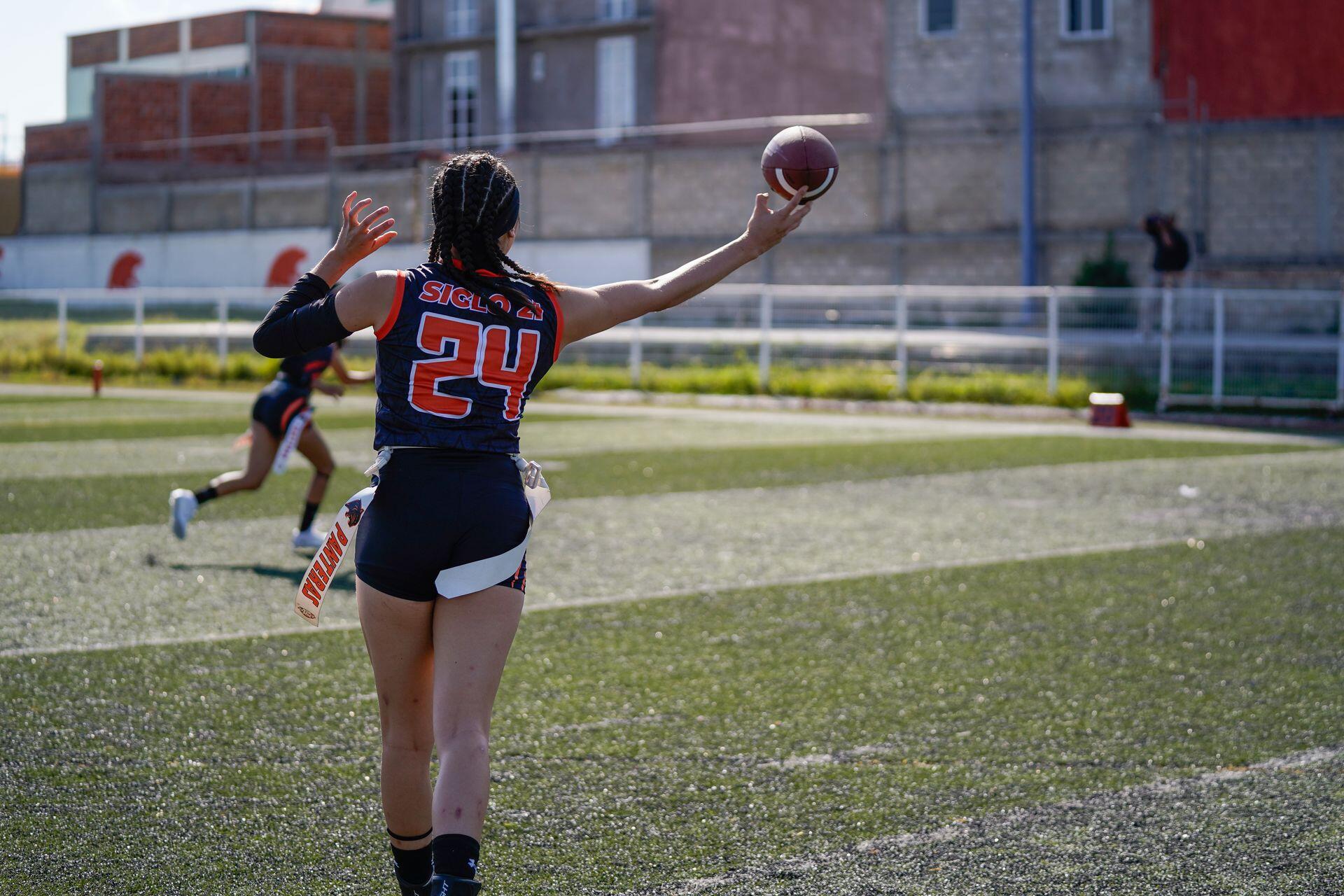
The quarterback leads the offence by calling plays and delivering accurate passes. Reading defensive formations and making quick decisions are essential skills.
Centre
The centre snaps the football to the quarterback before becoming an eligible receiver in many leagues. This creates another passing option immediately after the play begins.
Wide Receivers
Receivers run planned routes to create space and catch passes. Good footwork, acceleration and reliable hands are vital.
Running Back
Not every team uses a dedicated running back, but many offences include one to carry the football, catch short passes or create mismatches against defenders.
Rushers and Defenders
Defensive players cover receivers, defend passing lanes, rush the quarterback and pull flags before runners can gain extra yards. Communication between defenders is particularly important because one missed assignment can quickly lead to a touchdown.
Which flag football position are you trying out for? Here are all of the guidelines in our next article!
⚡ Speed
🔄 Agility
🚩 Safe flag-pulling technique
🎯 Accurate passing
👐 Reliable catching
🗣️ Team communication
👀 Awareness of space
Equipment Needed
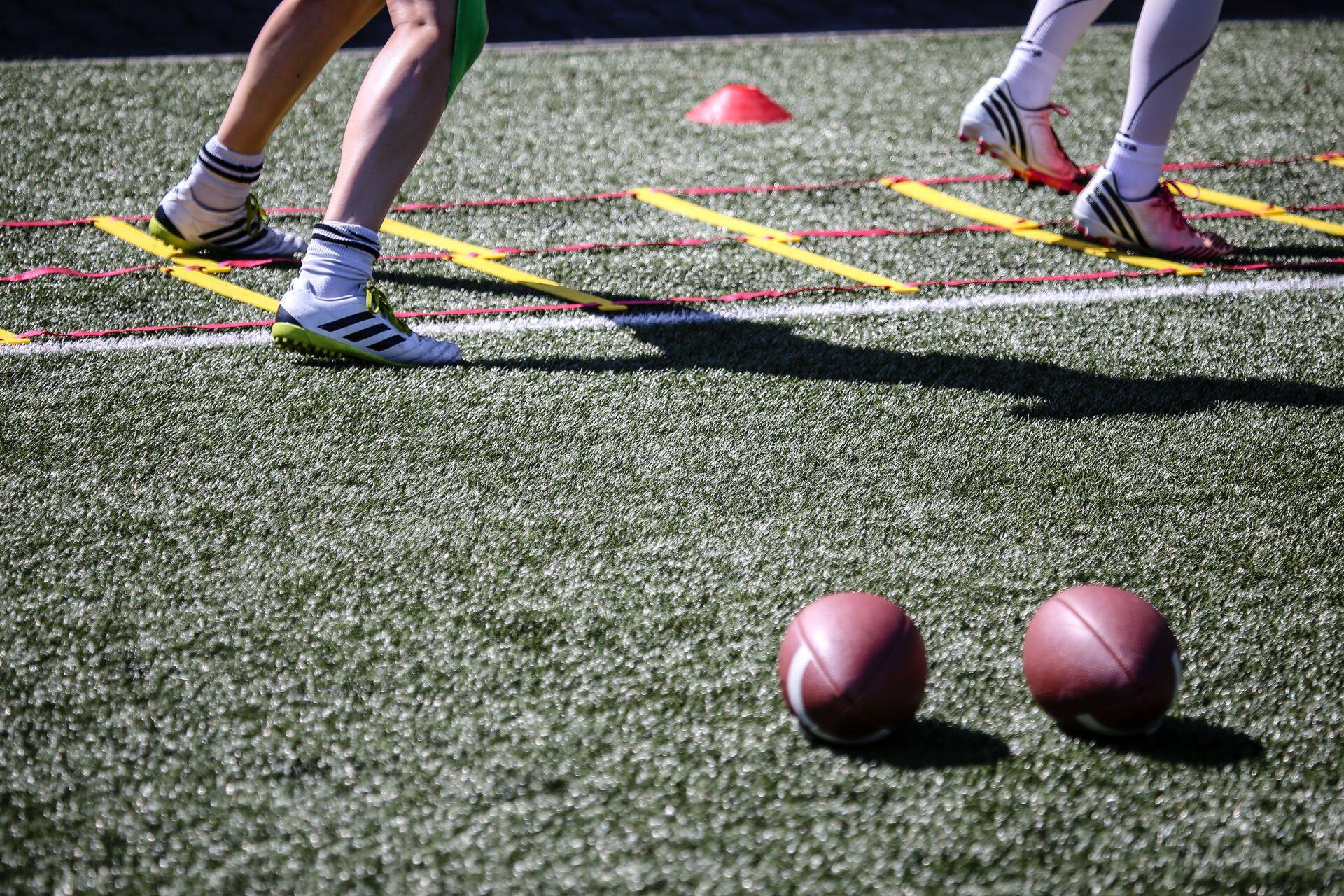
One reason for flag football's popularity is that getting started doesn't require expensive equipment. The most important piece of equipment is the flag belt. Every player wears a belt fitted with two detachable flags that defenders must remove to stop the play. Players also need an American football suited to their age group. Youth leagues often use smaller footballs that are easier to throw and catch. Comfortable athletic clothing is recommended, with many leagues asking players to avoid shorts with pockets because flags can become caught during play. Football or football (soccer) boots with moulded studs provide good grip on grass surfaces. Indoor leagues often allow trainers instead. Although helmets and shoulder pads are not required, many organisations recommend wearing a mouthguard for additional protection.
Flag Football Seasons and Game Information
When is flag football season? Unlike many traditional sports, flag football is played throughout the year in many countries. Recreational leagues, school competitions and national tournaments all have their own schedules, so the season depends on where you live and the organisation you join. In the United States, youth leagues often begin in the spring or autumn to avoid the hottest summer months. College tournaments usually follow the academic calendar, while adult recreational leagues can run almost year-round. Indoor competitions also make it possible to play during the winter. Internationally, national federations organise regional championships and qualifying events throughout the year. The sport continues to grow across Europe, Asia, Africa and South America, with more countries introducing youth development programs and competitive leagues every season.
It was a mission of mine to make sure that people would respect the game of flag football and for them to know it’s not as easy as you may think!
Darrell “Housh” Doucette, USA flag football quarterback and world champion.
The biggest change in the sport's history came in October 2023, when the International Olympic Committee confirmed that flag football would be included in the Los Angeles 2028 Olympic Games. The announcement marked a major step forward for a sport that has spent decades building an international following. The Olympic tournament will feature both men's and women's competitions, giving athletes from around the world the chance to compete for the first-ever Olympic medals in flag football. Many national federations have already expanded grassroots programs in preparation for qualification.
1940s
Early versions of non-contact football begin appearing on American military bases.
1960s
Recreational flag football leagues become more organised across the United States.
1980s
National tournaments and youth competitions expand.
1998
The International Federation of American Football (IFAF) is founded to oversee global development.
2002
The first IFAF Flag Football World Championship takes place.
2010s
Rapid international growth leads to professional leagues and university competitions in multiple countries.
2023
Flag football is officially approved for the Los Angeles 2028 Olympic Games.
2028
Olympic debut at the Summer Games in Los Angeles.
Curious to read on the different flag football plays?
When Does Flag Football Season Start?
There is no universal start date for the flag football season because leagues operate independently. Youth leagues often begin registration several weeks before the season starts, allowing players to attend training sessions before competitive matches begin.
Typical schedules include:
- Spring leagues: February to May
- Summer leagues: June to August
- Autumn leagues: September to November
- Indoor winter leagues: December to February
Schools and universities usually organise competitions during the academic year, while local clubs may offer multiple seasons each year. If you're interested in playing, it's worth checking with local sports centres, schools or national governing bodies to find leagues in your area.
How Long Is a Flag Football Game?
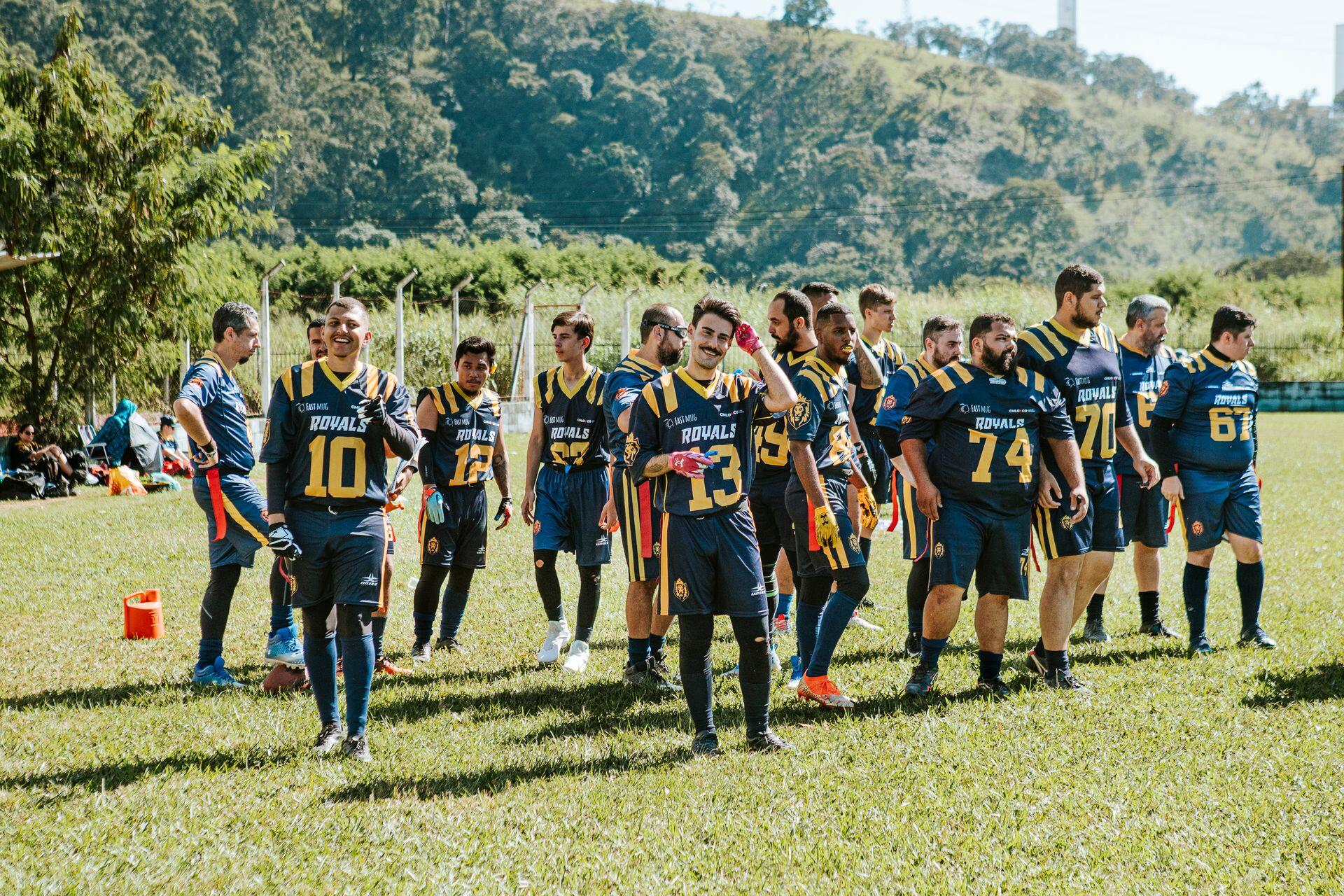
How long is a flag football game? Flag football games are shorter than traditional American football games, making them ideal for recreational leagues and tournaments. Most games consist of two halves lasting between 20 and 30 minutes each, with a short halftime break. Many youth competitions reduce playing time even further to suit younger athletes.
A typical match includes:
- Two halves of 20–30 minutes
- Halftime of 5–10 minutes
- Running clock during most of the game
- Clock stoppages in the final minutes of close matches, depending on league rules
Because there are fewer stoppages than tackle football, games move quickly and keep players constantly involved. Tournament organisers can schedule multiple matches in a single day, allowing teams to play several opponents during weekend competitions.
How Is Flag Football Scored
Scoring follows a system that is similar to traditional American football, although exact point values may vary slightly between leagues. A touchdown is the main way to score and is usually worth six points. To score, a player must carry the football across the opponent's goal line or catch a legal pass inside the end zone. After a touchdown, teams attempt an extra-point conversion.
Most leagues offer two options:
- A short conversion attempt worth one point.
- A longer attempt worth two points.
Some competitions also award two points for a safety, which occurs when the offensive team is stopped inside its own end zone. Interceptions can completely change the momentum of a game. In many leagues, defenders can return an interception for a touchdown if they avoid having their own flag pulled before reaching the end zone. Unlike tackle football, field goals and punts are uncommon in many flag football formats, keeping games focused on passing, running and offensive creativity.
Touchdown: 6 points
Short conversion: 1 point
Long conversion: 2 points
Safety: 2 points
Because players cannot rely on tackling or physical strength, successful teams place a greater emphasis on tactics. On offence, coaches use motion, misdirection and quick passing to create space. Players work together to stretch the defence and create open passing lanes. Defensively, teams often switch between zone coverage and man-to-man marking depending on the situation. Good communication is essential, as defenders need to react quickly to crossing routes and changing assignments. At higher levels, teams spend just as much time studying formations and planning plays as they do practising athletic skills. Timing, precision and teamwork are often what separate the strongest teams from the rest.
How to Get Involved in Flag Football
Getting started in flag football is easier than many people expect. You don't need years of experience or expensive equipment to join a local league. Many clubs welcome complete beginners and offer sessions designed to teach the basic rules before competitive games begin.
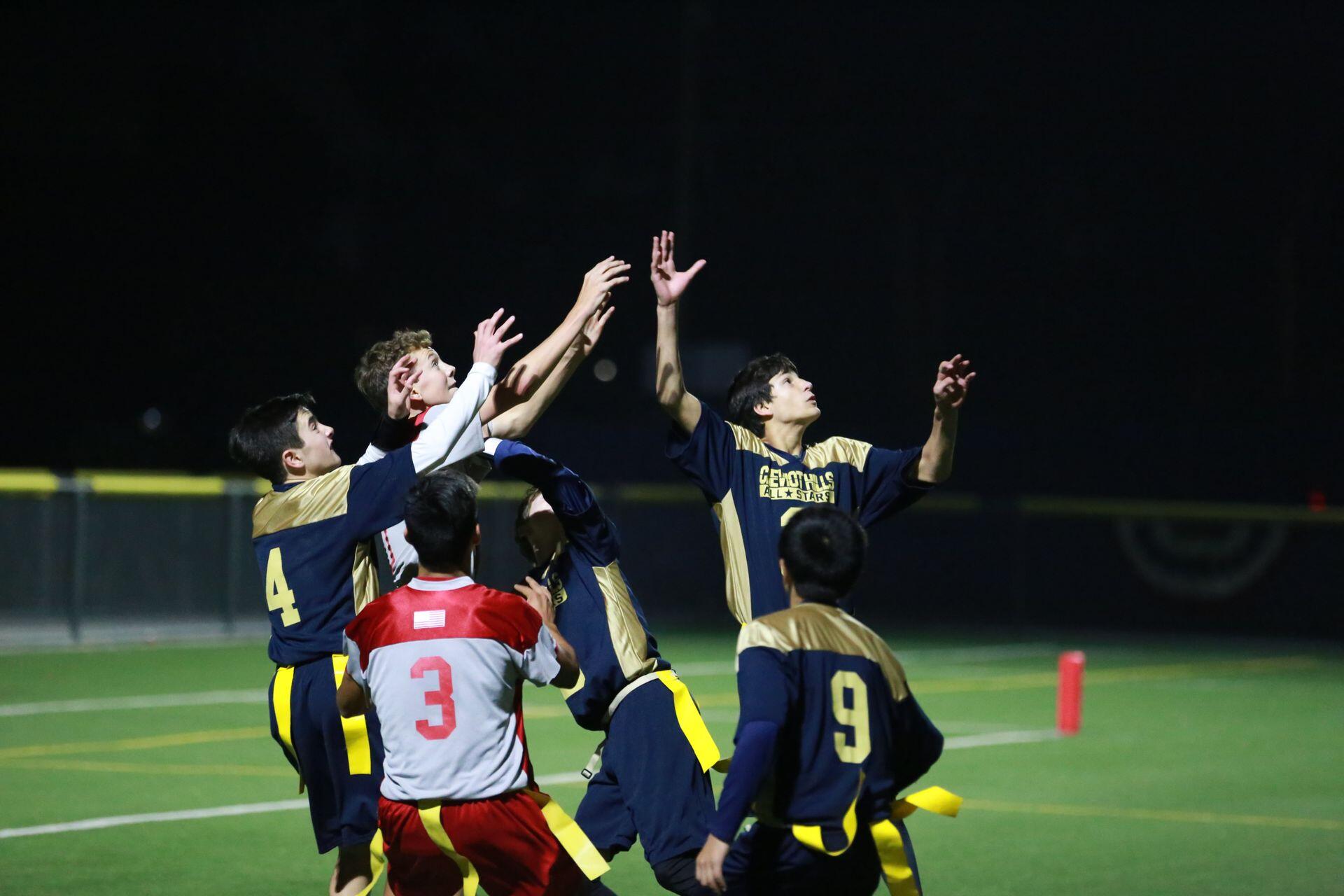
The first step is finding a club or league near you. Schools, universities, community sports centres and national governing bodies often organise competitions for different age groups and experience levels. Whether you're looking for a casual social league or a more competitive environment, there are usually several options available. If you've never played before, don't worry about learning every rule immediately. Most beginners pick up the basics after just a few training sessions. Coaches focus on passing, catching, running routes and pulling flags before introducing more advanced tactics.
Improving your fitness can also make your first games more enjoyable. Sprint training, agility drills and simple catching exercises all help build confidence on the field. Watching experienced teams can also improve your understanding of positioning and game strategy. Private coaching is another way to develop your skills more quickly. A qualified coach can help you improve your throwing technique, footwork, decision-making and tactical awareness, whether you're preparing for your first league or aiming to compete at a higher level. If you're looking for personalised support, a sports tutor on Superprof can help you build confidence, learn the rules and improve your performance through one-to-one coaching.
1. Find a local club or recreational league.
2. Learn the basic rules.
3. Buy a flag belt and suitable sports clothing.
4. Practise throwing and catching regularly.
5. Work on speed and agility.
6. Join training sessions before entering competitions.
Flag football is growing faster than ever and the Olympic Games are expected to attract even more players over the coming years. Whether you want to stay active, meet new people or compete at a high level, it's a sport that offers opportunities for everyone. Flag football offers the excitement of American football in a format that is faster, safer and more accessible.
With simple equipment, straightforward rules and opportunities for players of all ages, it's no surprise that participation continues to grow around the world. The sport's inclusion at the Los Angeles 2028 Olympic Games is another sign of its rapid development and global appeal. Whether you're joining a local league for fun, improving your fitness or aiming to compete, learning the fundamentals is the first step. With regular practice and guidance from an experienced coach, you'll quickly develop the skills and confidence needed to enjoy one of the world's fastest-growing sports.
Summarise with AI:
Did you like this article? Leave a rating!

 Loading...